Pantry Items
Last updated
A pantry item is a food that is physically in your kitchen right now, with an amount attached. The jug of milk on the shelf is a pantry item; milk in general is a food. Tuna's picture of your kitchen is the sum of your pantry items, which is why keeping them roughly honest pays off everywhere else.
The four amounts
Every pantry item tracks a small set of numbers, and they mean different things (enter them in any unit you like; unit conversions keep them consistent):
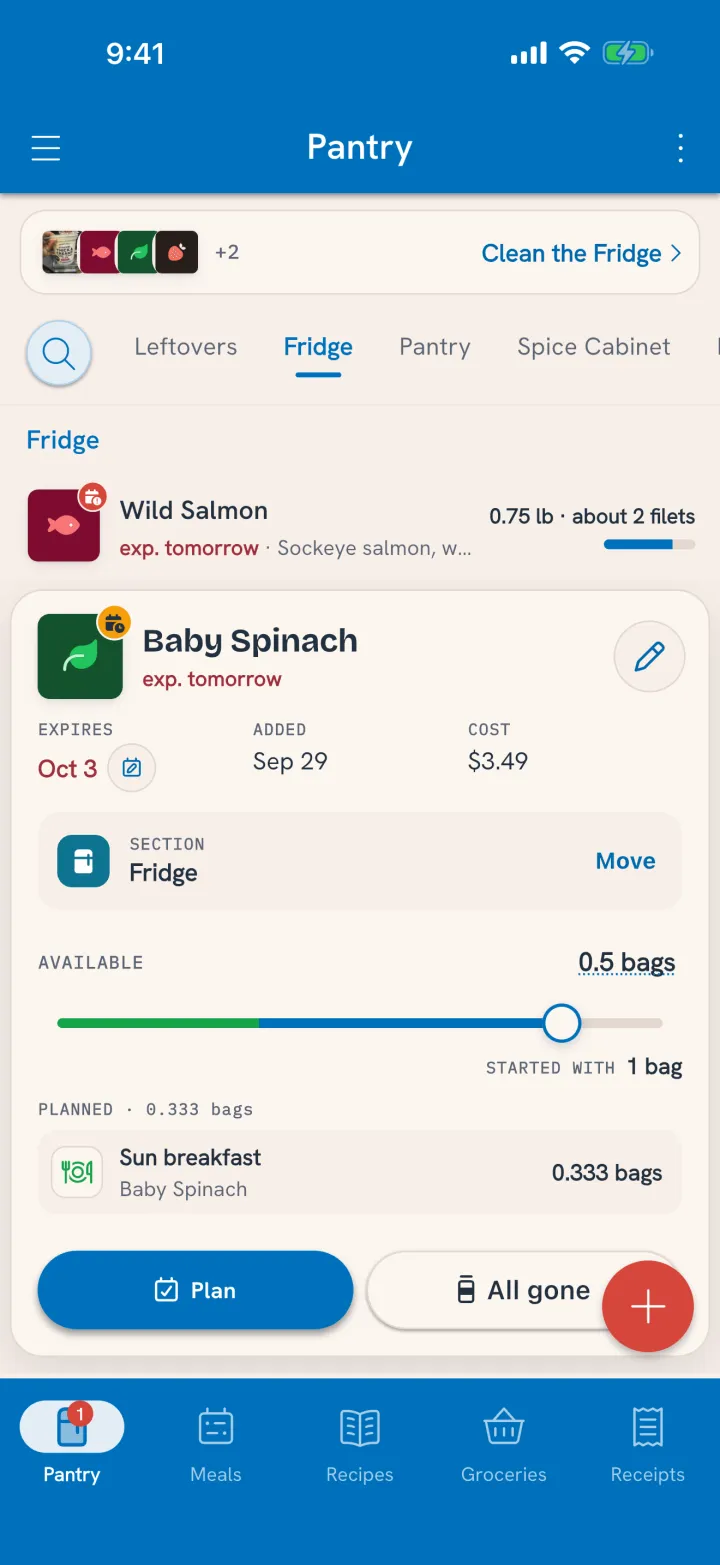
- Starting amount: how much you brought home. Two jugs, one box, five apples.
- Left: how much is physically remaining.
- Planned: how much tomorrow's meals have already claimed. Planning a meal sets servings aside without touching what is left.
- Available: left minus planned. What's still free to use.
You never do this math. Cooking, logging, and planning move the numbers on their own; the amounts above are just how to read what you see.
Expiration
Every item gets an expiration date the moment it enters the pantry. Tuna picks the best default it can, in order:
- What it learned from the last time you had this exact item.
- What it knows about this specific food.
- The typical shelf life for that kind of food.
Glance at the package and fix the date when the default is wrong; one tap now saves a false alarm later.
Freezing, snoozing, and history
Freezing an item pauses its clock. Tuna banks the shelf life it had left and restores it when you thaw. Freezing part of something splits it into a fresh item and a frozen one.
Still good is the answer to a reminder about an item you know is fine. It snoozes that item's alerts for the whole household.
Nothing in the pantry is ever really deleted. When something is used up, tossed, or cleared out, it moves to history, where it still powers your spending, waste, and shopping patterns.